
Mineral Oxychloride vs. Chlorine
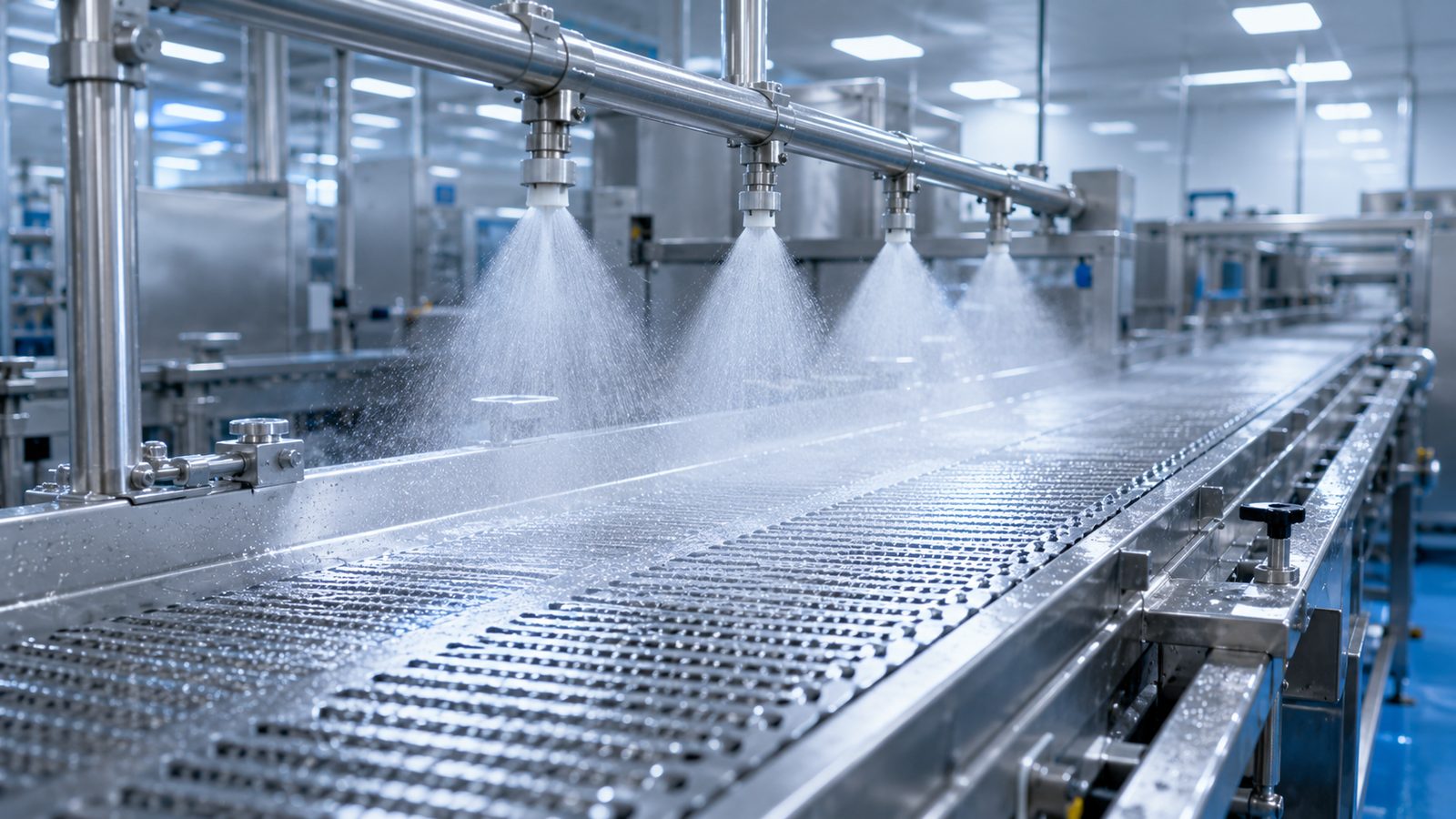
Jenfitch mineral oxychloride oxidizes at 2.8–2.9 V versus chlorine's 1.36 V — killing through oxygen radicals rather than chlorination, with no chlorinated by-products and a far lower dose.
Approved, certified & independently validated
 EPA FIFRA
Registered
 USDA Organic
Certified
 NSF/ANSI
Standard 60
Side by Side
Mineral oxychloride vs. chlorine.
| Criterion | Mineral oxychloride (JC 9465 / 9450) | Chlorine (Cl2 / NaOCl) |
|---|---|---|
| Oxidation potential (V) | 2.8–2.9 | 1.36 (Cl2); 0.94 (NaOCl) |
| Mechanism | Reactive oxygen species — oxidation by oxygen radicals | Chlorination / oxidative poisoning |
| Relative effectiveness | 12–24× chlorine on biofilm, bacteria, viruses, spores | Baseline |
| Typical dose (inorganics) | <1.0 mg/L per mg/L | ~6 mg/L per mg/L |
| Residual protection | Mildly biocidal mineral-oxide by-products; ORP-verified | Free-chlorine residual (pH-dependent) |
| By-products | No chlorinated DBPs; breaks down existing organics | THMs / HAAs and other chlorinated DBPs |
| Handling / safety | 100% water-soluble ready-to-use liquid; ~6-month shelf life | Corrosive gas or hypochlorite; ~30-day shelf life |
| Capital cost | Minimal — metering pump and ORP controller | Gas rooms / scrubbers or bulk hypochlorite storage |
| Operating cost | Lower dose offsets unit price | Higher dose; DBP management |
| Control method | ORP (mV), tied directly to kill efficacy | Free-chlorine residual / ppm |
Why the Gap
A different way to kill.
Chlorine disinfects by chlorinating and oxidizing cellular structures — effective, but comparatively slow, pH-sensitive, and prone to forming chlorinated disinfection by-products (DBPs) as it reacts with organic matter. Mineral oxychloride works differently: the weakly bound mineral–oxygen complex releases a family of reactive oxygen species (superoxide, hydroxyl radical, singlet oxygen, hydroperoxyl, and peroxide) that attack cell membranes, proteins, and nucleic acids through oxygen radicals rather than chlorine poisoning.
That mechanism is why the numbers diverge. Against a Salmonella enterica challenge (30 minutes, 2.0×10⁷ CFU/mL starting load), JC 9465 delivered a 6.60 log reduction at just 2 ppm, while sodium hypochlorite needed 100 ppm to reach a comparable 6.49 log — and managed only 2.02 log at 10 ppm. Overall, the chemistry is 12–24× more effective than chlorine at controlling biofilms, bacteria, viruses, and spores, and it works in places where chlorine struggles, such as inside established biofilm.
Lower dose, no chlorinated by-products
Because each molecule generates multiple oxidizing species and the reaction is effectively catalytic, the dose is low: below 1.0 mg/L per mg/L of inorganics, compared with roughly 6 mg/L for chlorine. And because the active species are oxygen radicals rather than chlorine, treatment does not add chlorinated DBPs — in fact the oxidation breaks down organics that would otherwise form them. The mineral-oxide by-products that remain are mildly biocidal, resist recontamination, and fall below FDA limits.
Handling and control
Mineral oxychloride ships as a 100% water-soluble, ready-to-use liquid with roughly a six-month shelf life — about six times that of sodium hypochlorite — and is dosed to a target ORP rather than by ppm alone. Holding roughly +600 mV creates a disinfection barrier; +700 mV delivers a 6-log kill in under 10 seconds. JC 9465 is EPA FIFRA registered and USDA NOP Organic certified; JC 9450 is NSF/ANSI Standard 60 certified.
The Benchmark
Oxidation potential of common oxidants.
| Oxidant | Oxidation potential (V) |
|---|---|
| Fluorine | 3.06 |
| Mineral oxychloride (JC 9465 / JC 9450) | 2.8–2.9 |
| Hydroxyl radical (•OH) | 2.80 |
| Ozone (O3) | 2.07 |
| Chlorine dioxide (ClO2) | 1.57 |
| Hypochlorous acid (HOCl) | 1.49 |
| Chlorine (Cl2) | 1.36 |
| Sodium hypochlorite (NaOCl) | 0.94 |
| Superoxide (O2−) | −2.40 |
The takeaway
Where you need stronger, faster oxidation without chlorinated by-products — especially on biofilm, in food and produce, or where chlorine underperforms — mineral oxychloride delivers higher potential (2.8–2.9 V), a lower dose, and ORP-verified control. Chlorine remains a sound, inexpensive residual disinfectant for many distribution systems.
Frequently Asked Questions
Mineral oxychloride and chlorine.
Is mineral oxychloride stronger than chlorine?
Yes. Its effective oxidation potential of 2.8–2.9 V is well above chlorine's 1.36 V (and sodium hypochlorite's 0.94 V), and it is 12–24× more effective than chlorine against biofilm, bacteria, viruses, and spores.
Does it form the same by-products as chlorine?
No. It kills through oxygen radicals rather than chlorination, so it does not add chlorinated disinfection by-products such as THMs and HAAs — and it breaks down existing organics that would otherwise form them.
How much less product do I need?
For inorganics, dosing is below 1.0 mg/L per mg/L, compared with roughly 6 mg/L for chlorine. The lower dose helps offset the higher unit price.
Can it replace chlorine everywhere?
Not always. Chlorine remains an economical, well-understood residual disinfectant for distribution systems. Mineral oxychloride is the stronger choice where chlorine underperforms — biofilm, food and produce, cooling systems — and can be run alongside existing chlorinated protocols.
How is it dosed and verified?
As a ready-to-use liquid dosed to a target ORP in millivolts. Roughly +600 mV establishes a disinfection barrier and +700 mV delivers a 6-log kill in under 10 seconds. See the ORP chart.