Food safety and product quality are inseparable in modern produce handling. A single contamination event can trigger recalls, damage a brand, and put consumers at risk, while spoilage organisms quietly erode shelf life and margins. JC 9465, a mineral oxychloride disinfectant that generates reactive oxygen species (ROS), gives growers, packers, and processors a way to address both problems at once — rapid pathogen inactivation without changing the taste, color, or texture of the food it protects.
Why oxidative disinfection fits food operations
Rapid pathogen inactivation
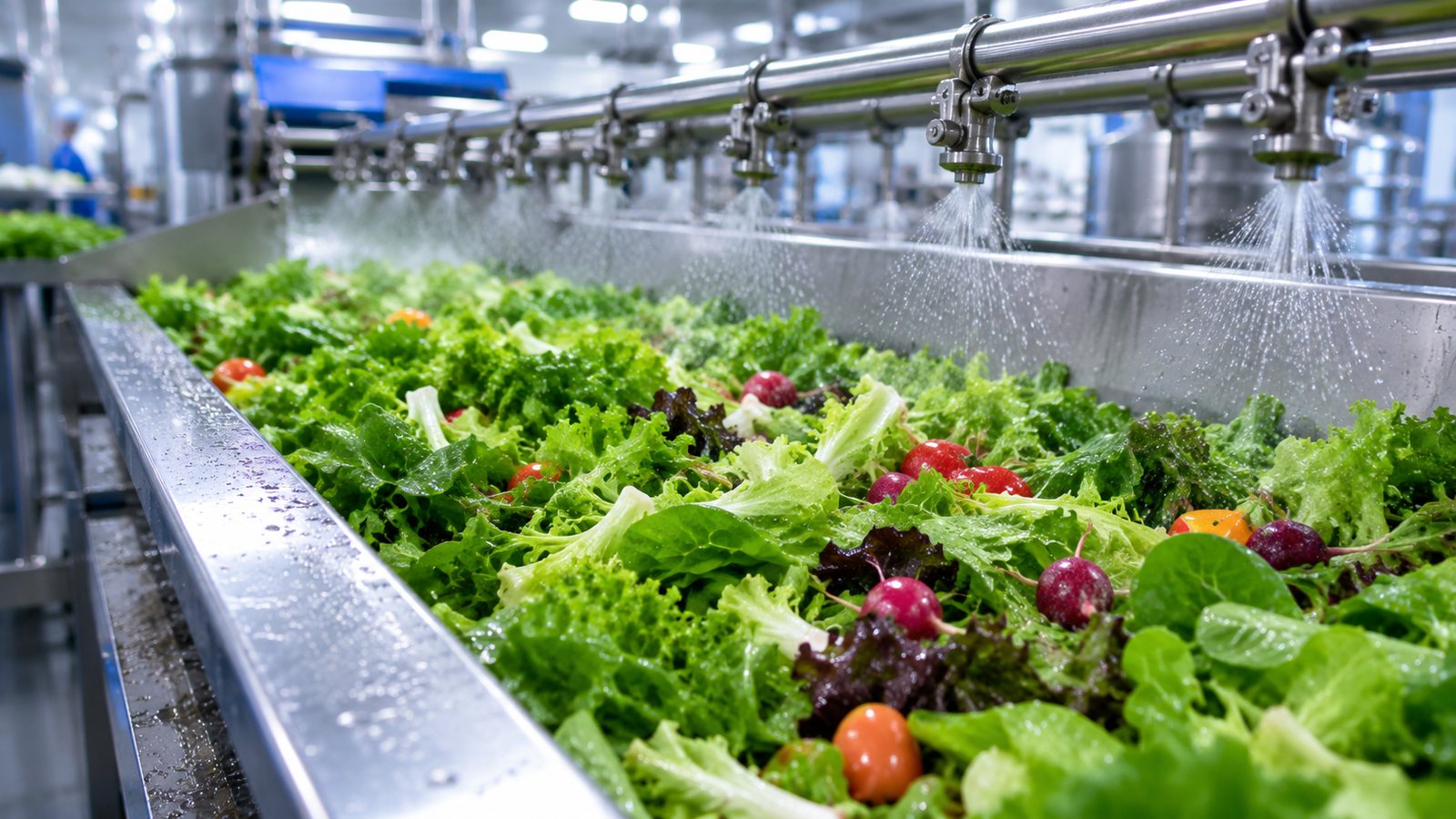
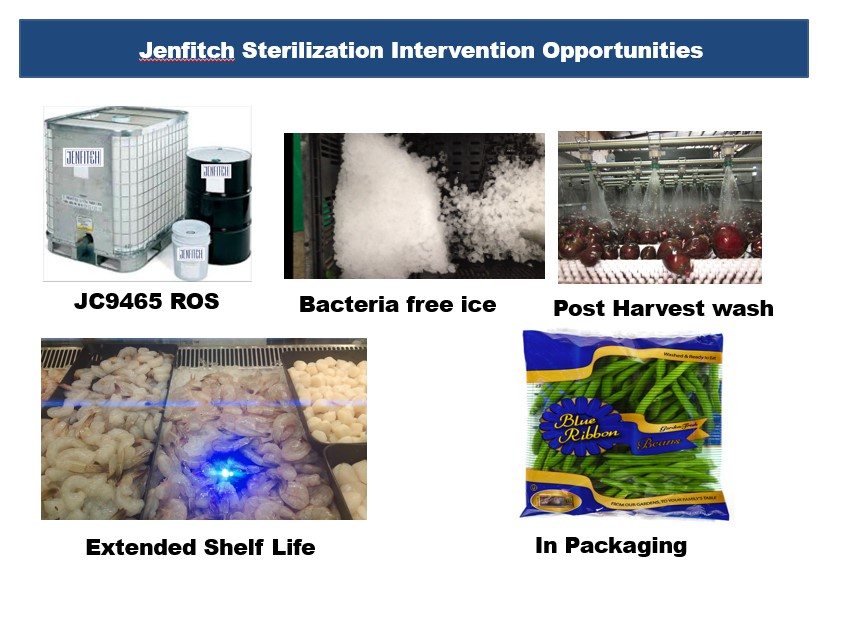
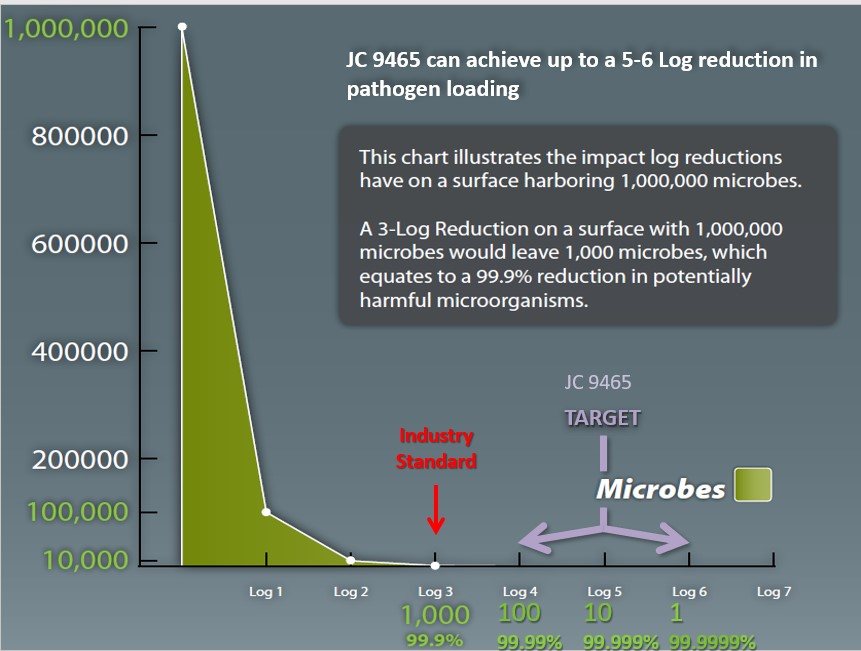
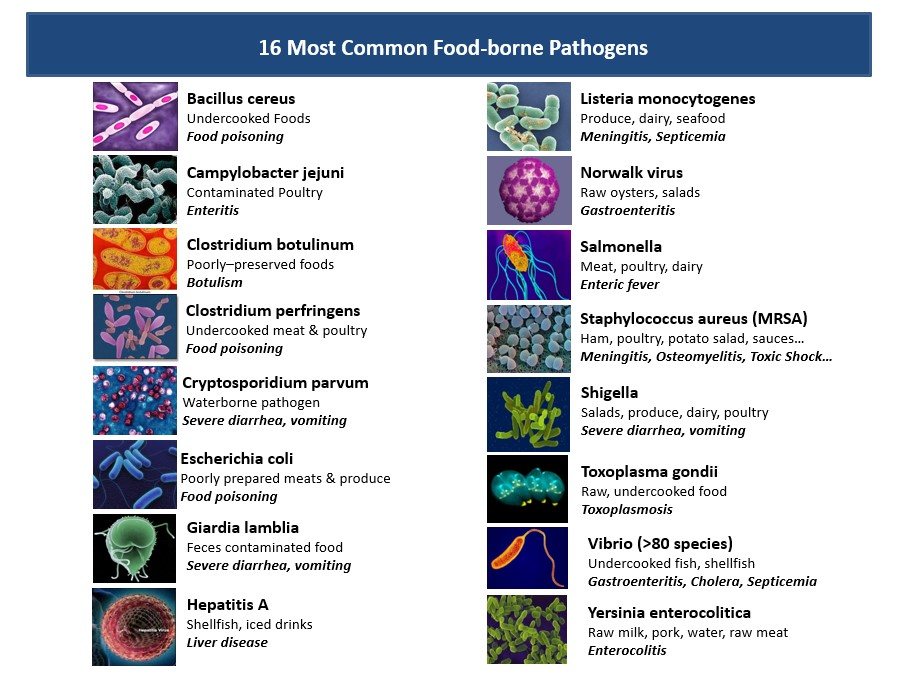
By generating hydroxyl radicals and other reactive oxygen species, JC 9465 achieves high-log reduction of organisms such as E. coli, Salmonella, and Listeria in seconds of contact. The oxidative mechanism attacks cell membranes directly rather than relying on residual chemistry, so treatment is fast and predictable across wash water, flumes, and direct-contact surfaces.
No residue, no off-flavors
Because the active chemistry reverts to benign byproducts, JC 9465 inactivates spoilage and pathogenic organisms without leaving residue on treated produce or altering flavor. That matters for fresh-cut, ready-to-eat, and organic programs where sensory quality and label requirements leave no room for taint.
The goal is simple: safer food that still looks, smells, and tastes exactly as the grower intended.
Extending shelf life and reducing loss
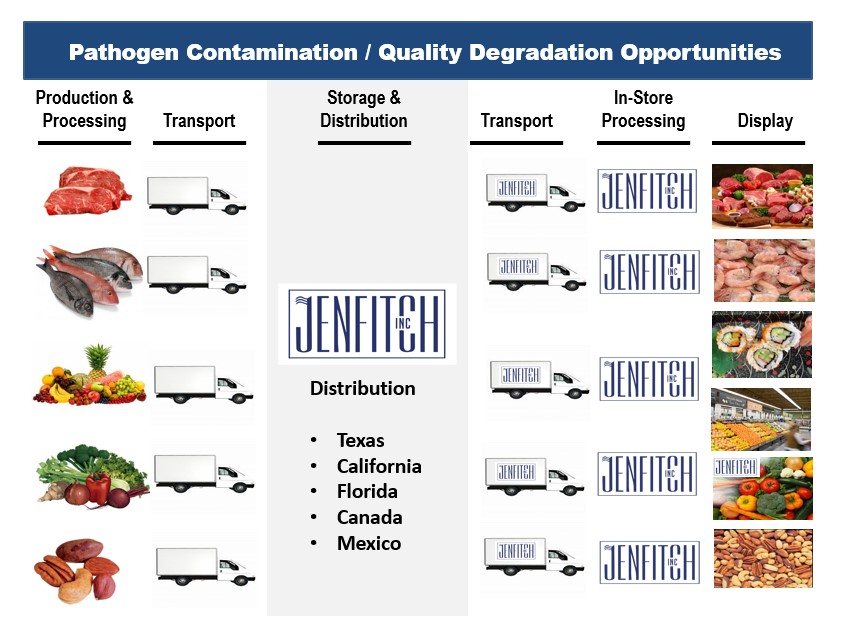
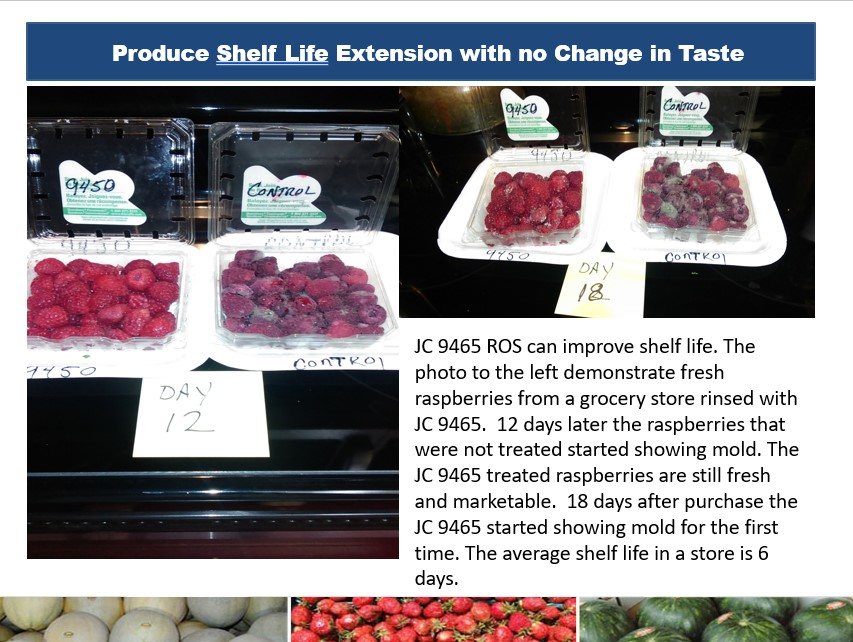
Reducing the microbial load on incoming produce slows the decay that shortens shelf life. Lower bacteria and mold counts at the wash step translate into fewer rejected loads, less shrink in distribution, and more days of saleable quality on the shelf. For operations shipping long distances, even a small extension in usable life can change the economics of a season.
Where JC 9465 is applied
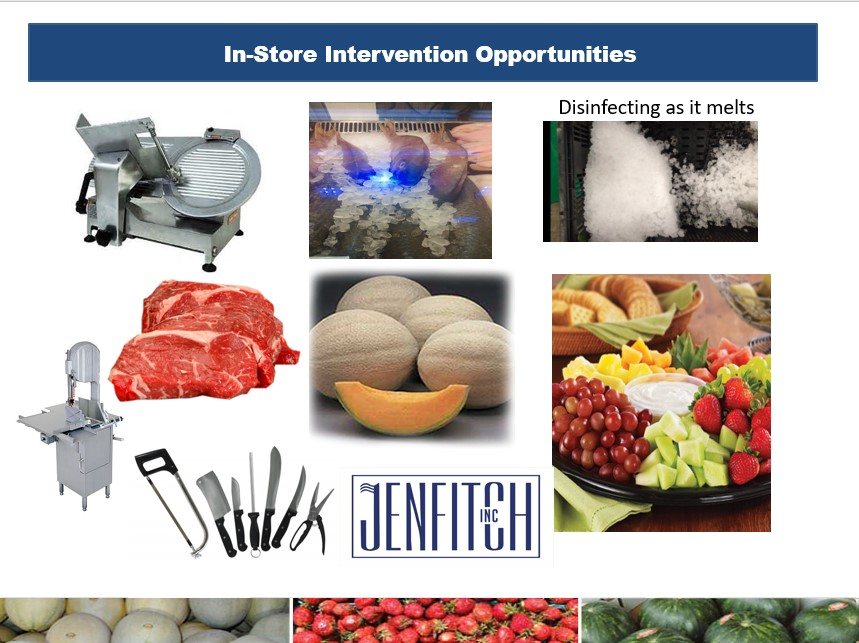
- Wash, flume, and hydrocooling water where cross-contamination is a risk
- In-field and post-harvest disinfection barriers using controlled ORP
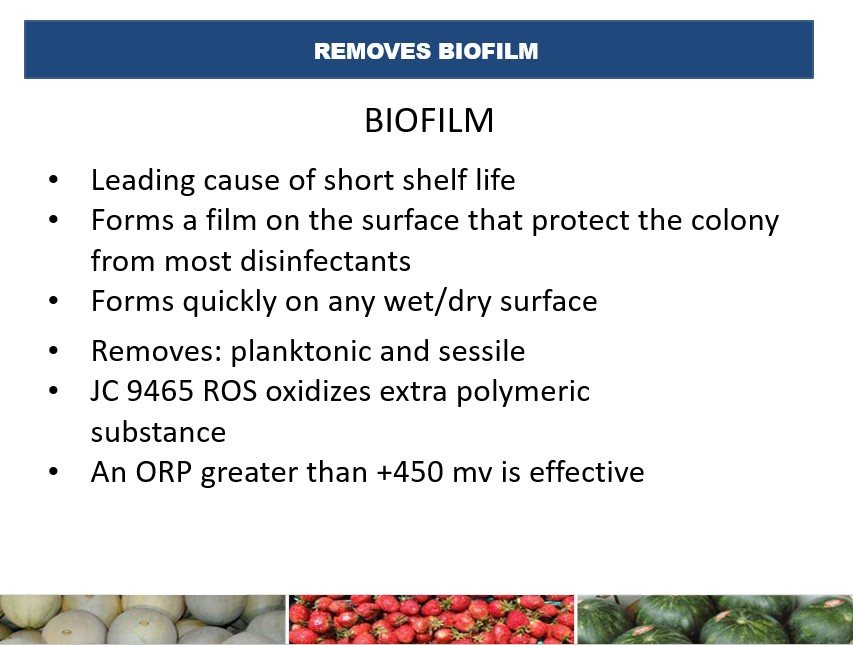
- Food-contact surfaces, conveyors, and packing lines
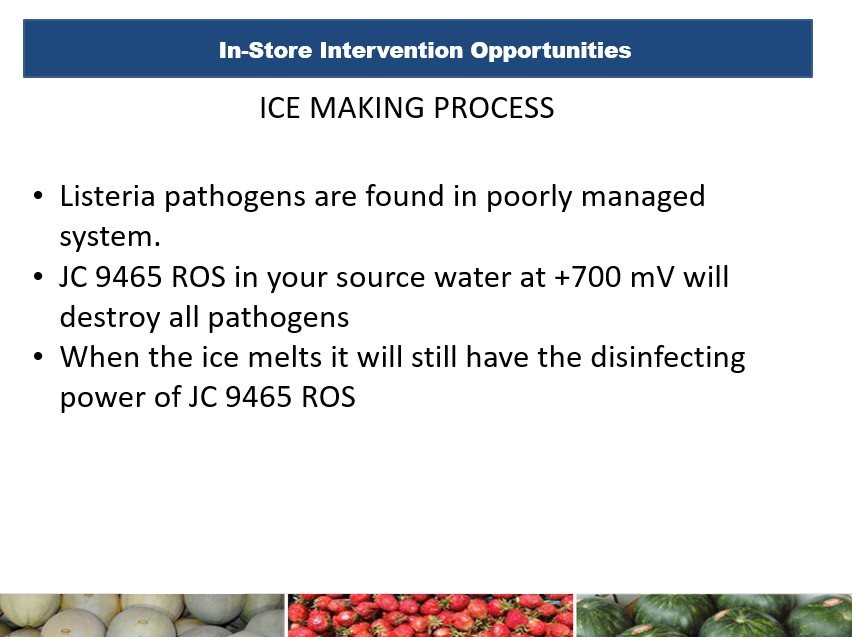
- Ice used to chill and transport fresh product
A dual return on safety and quality
Treating food safety and product quality as one program — rather than two competing costs — is where oxidative disinfection earns its place. JC 9465 delivers the fast, residue-free pathogen control that food safety plans demand while protecting the freshness and appearance that customers pay for, helping operations reduce risk and waste in the same step.
Have a water challenge like this?
Talk to Jenfitch about JC 9465, safety data sheets, or scoping a treatment program for your facility.
Contact Us