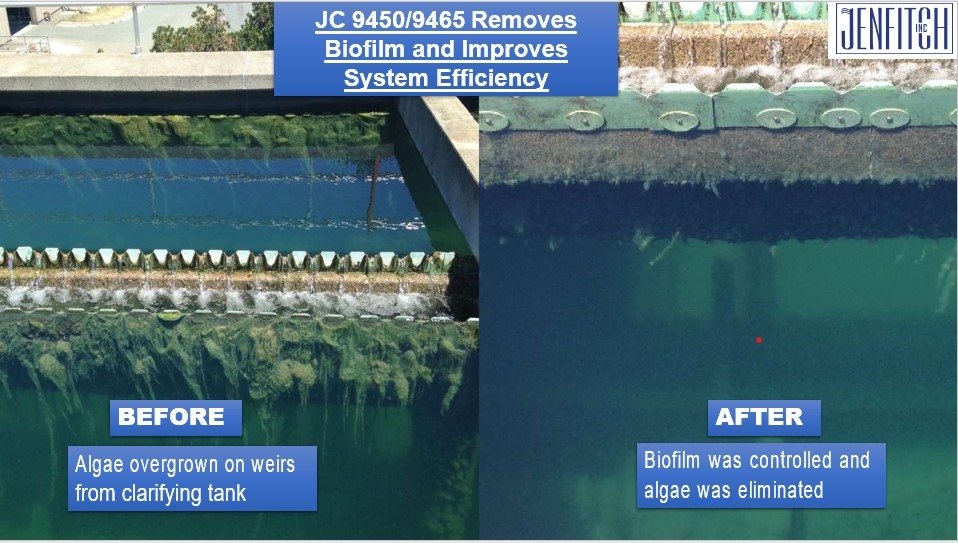
JC 9465 is a new strong oxidizer that generates reactive oxygen species (ROS) to remove biofilm and improve system efficiency in water treatment. Based on research into mineral oxychloride chemistry first developed in the early 1900s, it delivers a high concentration of oxidative energy for effective, low-cost disinfection.
Company history and development
- Jenfitch, Inc. was formed in 2008 to manufacture and market water treatment chemicals.
- JC 9465 is a new strong oxidizer, based around the research on mineral oxychloride chemistry that was first developed in the early 1900's. In the late 20th century, tools to measure this technology became commercially available, and JC 9465 has been commercially available since 2013 for proof of concept studies, plant trials, and laboratory studies, and is currently in the marketplace.
- Mr. Charles Jennings, owner and General Manager, is leading the research and marketing teams to develop JC 9465.
JC 9465: a new oxidant
JC 9465 is a new oxidative technology for generating reactive oxygen species (ROS) that simulate an advanced oxidation process (AOP) as a tool to measure disinfection effectiveness in water treatment solutions. In the past, water treatment professionals have been looking for ways to provide safe drinking water effectively.
What does JC 9465 offer?
Today the World Health Organization recommends that water is safe at an ORP greater than +750 mV. The laws currently being written recommend the use of the Langelier Index (LI) to monitor corrosion and water quality, using Oxidation Reduction Potential (ORP) as a way of maintaining safe water standards. Current EPA guidelines are being discussed to include ORP measurement (as mV) and LI as a matrix for water quality control.
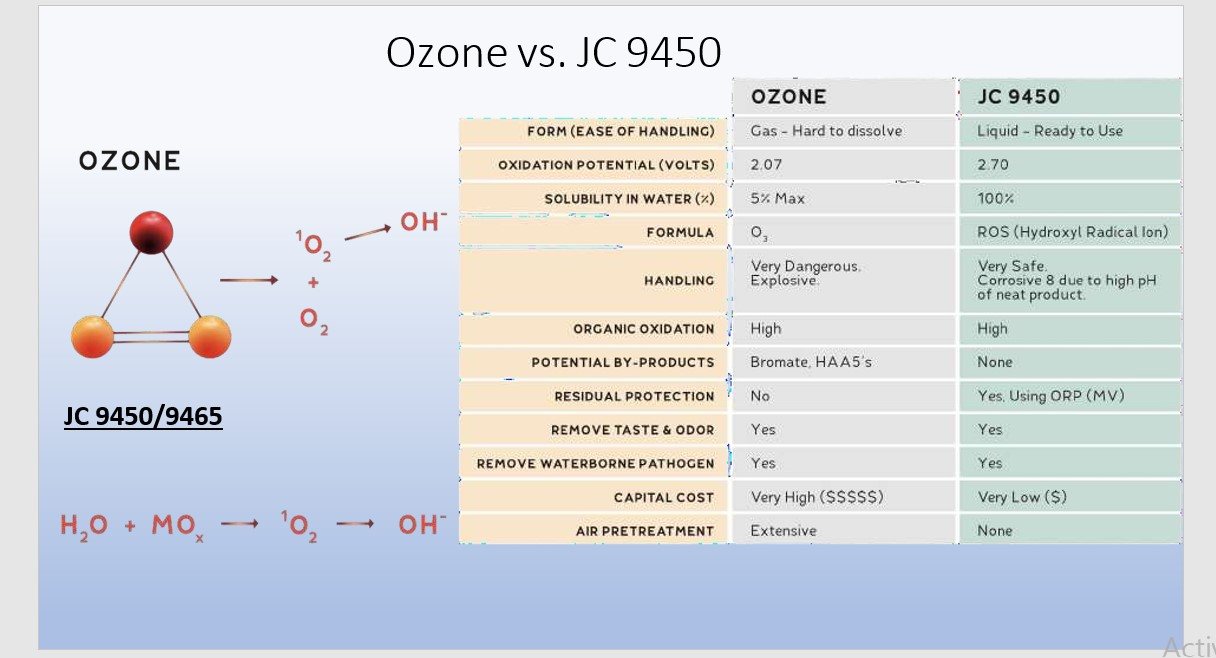
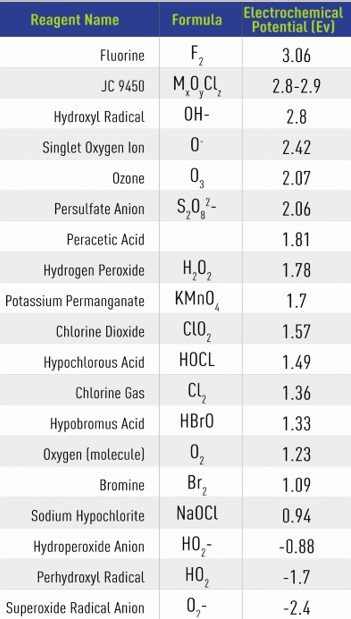
JC 9465 is a low-cost producer of hydroxyl radical ions. It is a very strong oxidant with a high concentration of oxidative energy, and it has a higher electronic footprint (Ev) versus the chemical footprint of other oxidants.
Electrochemical potential (Ev), a measurement of oxidative energy
- JC 9465 is 2.8 to 2.9 Ev
- Ozone is 2.07 Ev
- Sodium hypochlorite is 0.94 Ev
- Chlorine dioxide is 1.57 Ev
- Chlorine gas is 1.36 Ev
Why ORP is important to disinfection
- Measures energy available for disinfection
- Measures contact time required for disinfection
- Optimizes treatment based on system demand
This benchmark is based on using free available chlorine and reflects only a 4-log reduction versus time.
JC 9465 vs chlorine
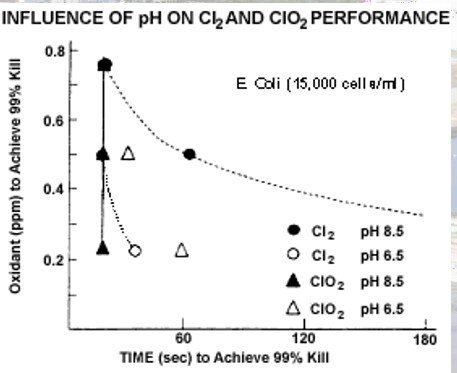
JC 9465 can achieve a six-log reduction in less than 10 seconds at 700+ mV or higher.
- JC 9465 can achieve a six-log reduction in less than 10 seconds at 700+ mV or higher.
- JC 9465 outperforms chlorine at a lower dosage (using ORP and dosage as measurement).
- JC 9465 is not pH dependent and has a higher ORP, going beyond chlorine at equivalent dosages.
By comparison, chlorine takes too long to kill pathogens, requires more chlorine for less results, and is an explosive gas and corrosive.
Handling properties of JC 9465
- Liquid requires rubber gloves, face shield, and a shirt with sleeves
- Corrosive in undiluted form, and will freeze
- Six-month shelf life versus 30 days for NaHOCl
Installation
Installation of this technology takes less than 30 minutes and requires no additional equipment.
- Simple to use and monitor
- Low capital investment
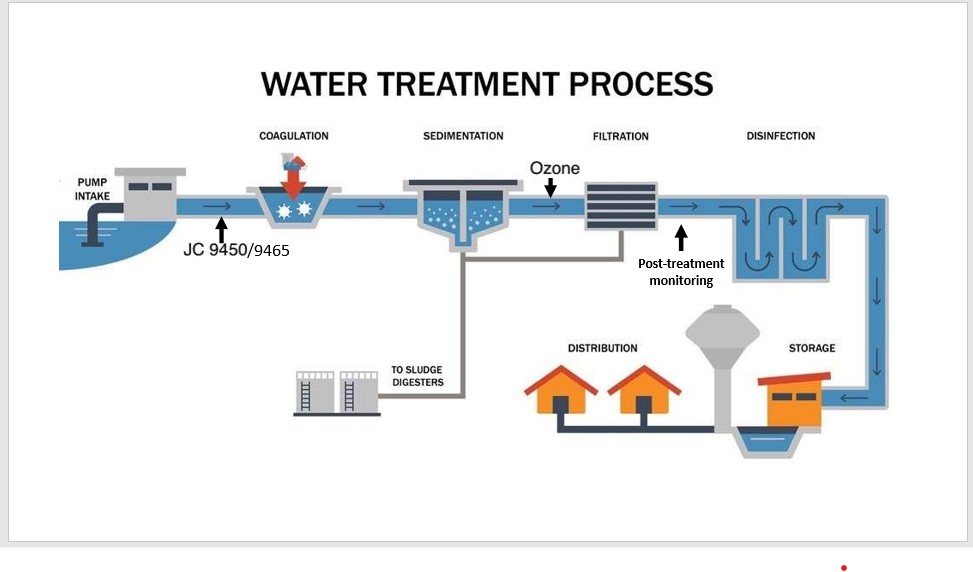
- Easy installation and used in multiple applications in the water treatment facility
A metering pump and drum are set at the injection site with regular containment.
Let's get started
Plant trial partnerships:
- Municipal water treatment pilot
- Wastewater treatment pilots
- Desalination studies
- Water recycle and reuse projects
Pilot study partnerships:
- Controlling biofilm in the distribution system
- Lowering or reducing the formation of TTHMs and HAA5s
- Lowering or reducing iron and manganese
- Lowering or eliminating taste and odor complaints
- Eliminating the influence of zebra mussels
Earning Contact Time (CT) credit as a primary disinfectant.
Summary
- We want to run more pilot studies in water systems impacted by THMs and HAA5s.
- We are looking for water plants with taste and odor complaints.
- We want to demonstrate biofilm removal.
- We want to do a study on removing zebra mussels.
Have a water challenge like this?
Talk to Jenfitch about JC 9465, safety data sheets, or scoping a treatment program for your facility.
Contact Us